

A Complete Guide to Network Performance Management (NPM)
Read More

When you stream content, process payments, or access cloud applications, data centers handle the processing. These facilities store and manage the digital information driving modern business. Moreover, they enable the AI applications transforming industries globally.
The global data center market is experiencing explosive growth. The current market size stands at approximately $300-350 billion and it is projected to exceed $600 billion by 2030 ~ (10-12)% CAGR growth.
AI infrastructure drives the fastest growth segment. Indeed, AI-related capacity shows 20-30% annual growth rates. Generative AI and large language models require massive computational resources. Consequently, GPU-powered data centers are experiencing unprecedented demand.
IT infrastructure now accounts for approximately 78% of total spending. Understanding data center architecture becomes critical for organizations planning digital infrastructure. Therefore, this article explores the core components, evolving architecture, and transformation happening within these facilities.
To understand how modern digital services operate at scale, it’s important to first understand the architecture powering them.
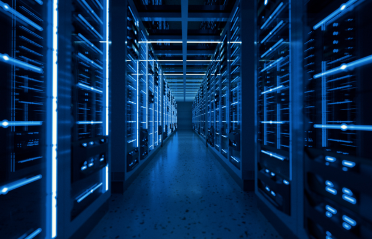
A data center is a secure facility housing computing infrastructure. These facilities contain servers, storage systems, and networking equipment working together. Additionally, they include power and cooling systems maintaining optimal operations.
Modern data centers operate as layered systems. Each layer serves specific functions. Together, they deliver seamless application performance and data availability.
These components work together to support the business operations. However, their effectiveness depends on proper integration and management. Consequently, organizations must understand each layer thoroughly.
Your videocalls, cloud storage and late-night orders all become possible with the internet running smoothly. And powering it we have the datacenters which may look like just big storage boxes. But they are built on a logical set of layers each with its own set of functionalities. Let us see the associated functionalities of the data center network architecture layers.

Before any software can run or any packet can travel, someone has to pour the foundation. We have the racks that hold the servers, the cables that form the connections and the power systems to keep everything running. Additionally to make all of these blocks function properly we need cooling mechanisms to prevent it all from overheating. Just think of it as the building itself, before anyone moves in.
Once the physical infrastructure is laid, next comes the network layer. In this layer we have the routers, switches and load balancers that take care of traffic directions, load optimisation and enforcing policies. Network engineers spend considerable time configuring VLANs, routing protocols, and redundancy mechanisms here, downtime is expensive and the systems must be resilient.
The Compute and Storage Layer is where most of the action lives.The servers run the applications while the storage systems hold the data. Specialized setups like network-attached storage (NAS) and storage area networks (SANs) give organizations the flexibility to separate storage from compute. And there are redundancy configurations in place to ensure that some single hardware failure does not lead to a complete operations halt.
This is one of the most significant shift in data centre designs that has enabled multiple virtual machines to share the same hardware. This helps in improving the utilization of the physical hardware. Instead of physical switches we now have Software-defined networking that allows the infrastructure to be configured and controlled via smart software tools. This is what makes cloud-scale operations possible.
Once everything is in place we have the application layer which makes every usage experience seamless. The purpose is to deliver applications reliably to the people who use them. We have elements here like load balancers that smartly distribute the incoming requests amongst the servers. DNS systems that translate human-readable domain names into machine understandable IP addresses. SSL/TLS encryption methods that keeps data secure while in transit. Overall it makes the users feel as if everything is so simple which is ultimately the goal.
There’s no single right answer when it comes to how organizations deploy their data centers. The decision depends on scale, budget, regulatory requirements, and how much operational control a company wants to retain.
These are at the top of the scale with companies like AWS, Azure and Google cloud. They have massive facilities that focus on efficiency and automation. They are designed to handle billions of transactions at one go. The economies of scale make them the backbone of cloud computing.
Not every company wants to build its own facility, and not every company is ready to move entirely to the cloud. Colocation providers like Equinix and Digital Realty offer a practical middle path leasing space and shared infrastructure to enterprises that want professional management without the capital expenditure of owning a facility. This is a flexible and a more cost effective option for growing organisations.
This model is more suitable for organisations that operate in regulated sectors and require better control over their infrastructure. Though on-premises data centers provide high level of control, but few things need to be kept in check – significant capital investment, ongoing operational expertise, and maintenance checks.
With rising use of IOT devices the applications demand faster output cycles and thus the distance between the user and the data center matters. This is solved by the edge data centers where smaller compute facilities are placed closer to where data is generated and consumed reducing latency for applications. The 5G and 6G networks are further accelerating this trend but edge doesn’t replace centralized infrastructure; it complements it.
Just like one model does not fit all, most enterprises don’t just choose one model. They have different models for specific usages. They combine the on-premises infrastructure with cloud resources to achieve a balance between control, cost and flexibility. This strategy makes it possible to solve different workloads with specific needs.

The architecture described in this article was largely stable for the better part of two decades. But with explosion of AI workloads, the proliferation of IoT and edge computing, and mounting pressure around energy consumption and sustainability have collectively forced a rethink of how data centers are designed, operated, and scaled.
Understanding the foundation what a data center is made of, how its layers interact, and which deployment model fits which need is the starting point for making those decisions well.
In the next part of this series, we go deeper into the operational realities: the critical challenges data center operators are navigating right now, from power availability and water consumption to the talent shortages., and how artificial intelligence is beginning to reshape data center management from the inside out.